What Is a Theoretical Framework? Definition, Examples and How to Write One
The theoretical framework is one of the most misunderstood parts of a thesis or dissertation. Students either write it too briefly, confuse it with the literature review, or skip it altogether because they are unsure what it is supposed to do. This guide explains what a theoretical framework is, how it differs from a conceptual framework and a literature review, how to write one step by step, and what it looks like in practice across different disciplines.
Quick Answer
A theoretical framework is the set of existing theories, concepts, and assumptions that a researcher uses to structure a study, interpret data, and situate findings within the broader scholarly conversation. It explains the lens through which the research problem is examined. It is not a summary of what others have written. It is the conceptual foundation that justifies why your study is designed the way it is, why you measure what you measure, and how you will interpret what you find.
What Is a Theoretical Framework?
A theoretical framework is the structure that supports and guides a research study by grounding it in established theory. As the USC Libraries Writing Guide defines it, a theoretical framework consists of concepts, together with their definitions and reference to relevant scholarly literature, and existing assumptions that are being tested in order to fulfill the research aims of your study.
The framework does three things. It identifies the key concepts and variables relevant to your research problem. It explains the relationships between those concepts based on existing theory. And it provides the lens through which you will analyze and interpret your data.
A theoretical framework is not:
- A summary of all theories related to your topic
- A literature review (though it often emerges from one)
- An original theory you invented for your study
- A list of definitions
It is a deliberate choice of which existing theoretical perspective best fits your research question and why.
Theory vs. Theoretical Framework
A theory is a well-established explanation of a phenomenon, supported by evidence and developed through repeated testing. A theoretical framework is how a researcher applies one or more theories to structure a specific study.
Think of it this way: Bandura's Social Learning Theory is a theory. Using Social Learning Theory to frame a study on peer influence and online risk-taking behavior among adolescents is a theoretical framework. The theory exists independently. The framework is your decision to use it, and your justification for doing so.
Why Does a Theoretical Framework Matter?
The theoretical framework introduces and describes the theory which explains why the research problem under study exists. It is used to limit the scope of the relevant data by focusing on specific variables and defining the specific viewpoint that the researcher will take in analyzing and interpreting the data.
In practical terms, the theoretical framework:
- Justifies your choice of research methodology and design
- Defines the key variables you will study and how you operationalize them
- Explains why your research question is worth asking
- Situates your findings within an existing body of knowledge
- Provides the basis for your discussion and interpretation
Without a theoretical framework, a study is just data collection without a scaffold. Supervisors and examiners use the framework to evaluate whether the researcher understands the intellectual context of their work.
Theoretical Framework vs. Conceptual Framework
These two terms are often confused. They are related but distinct.
| Theoretical Framework | Conceptual Framework | |
|---|---|---|
| Source | Draws from existing, established theories | Researcher-developed structure connecting concepts |
| Approach | Deductive (theory to observation) | Inductive (observation to pattern to theory) |
| Flexibility | More rigid, follows established principles | More flexible, can be modified as research develops |
| Scope | Broader theoretical principles | Focused on the specific research problem |
| Use | Tests or extends existing theory | Creates new understanding of relationships |
| Example | Using Maslow's Hierarchy of Needs to frame a study on employee motivation | Building a model showing how social media use, stress, and academic performance interact in teenagers |
A conceptual framework may include a theoretical framework. A theoretical framework is a specific type of conceptual structure derived from existing theory.
Theoretical Framework vs. Literature Review
Students frequently confuse the theoretical framework with the literature review. They serve different purposes and may appear in different parts of the thesis.
| Literature Review | Theoretical Framework | |
|---|---|---|
| Purpose | Establishes what is known and unknown | Provides the conceptual lens for the study |
| Content | Summary and critique of existing research | Chosen theory or theories, concepts, and their relationships |
| Output | Identifies research gap | Justifies methodological and analytical choices |
| Position | Usually Chapter 2 | May be Chapter 2 or Chapter 3, or embedded in the literature review |
The theoretical framework often emerges from the literature review. You read the existing research, identify which theories have been applied to similar problems, and select the one that best fits your study. The framework is then articulated separately to make the theoretical basis of your study explicit.
Types of Theoretical Frameworks by Discipline
Different disciplines draw on different theoretical traditions. Knowing which frameworks are common in your field is a practical starting point.
| Discipline | Common Theoretical Frameworks |
|---|---|
| Psychology | Social Learning Theory (Bandura), Self-Determination Theory, Cognitive Dissonance Theory |
| Sociology | Structural Functionalism, Conflict Theory, Symbolic Interactionism |
| Education | Constructivism (Vygotsky, Piaget), Communities of Practice, Bloom's Taxonomy |
| Business and Management | Agency Theory, Resource-Based View, Institutional Theory |
| Public Health | Health Belief Model, Social Ecological Model, Theory of Planned Behavior |
| Communication | Uses and Gratifications Theory, Agenda-Setting Theory, Framing Theory |
| Nursing and Healthcare | Orem's Self-Care Theory, Transtheoretical Model, Donabedian Model |
| Political Science | Rational Choice Theory, Institutionalism, Social Movement Theory |
This list is not exhaustive. The most appropriate framework is always determined by your research question and the existing scholarly conversation in your specific area.
How to Write a Theoretical Framework
Follow these steps to develop and write a theoretical framework for your thesis or dissertation.
Step 1: Clarify your research question and objectives
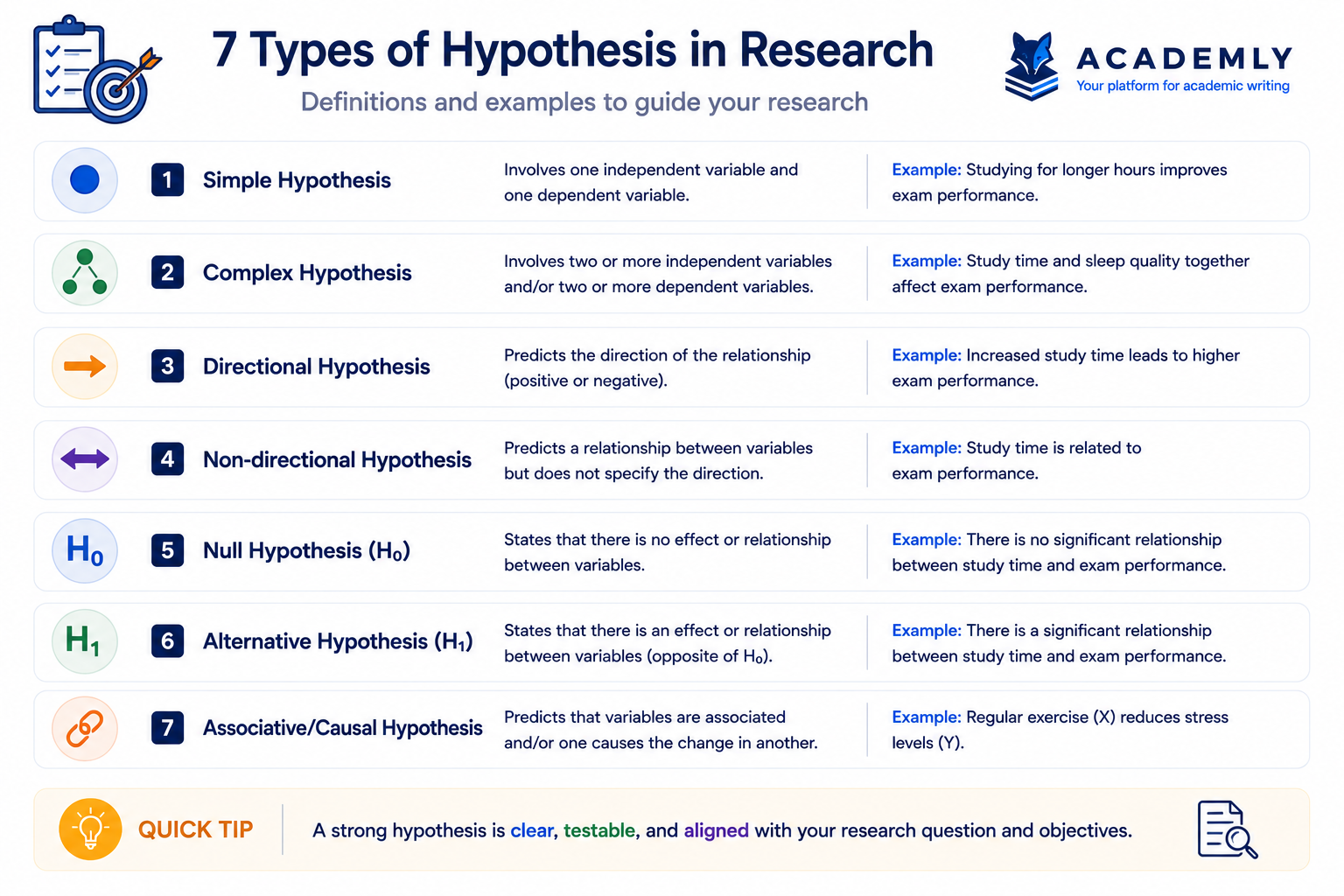
Your theoretical framework must serve your research question. Before choosing a theory, be clear about what your study is trying to answer or explain. See our guide on what is a hypothesis for how research questions connect to testable predictions.
Step 2: Identify the key concepts and variables
List the main concepts in your research question. These are the variables you will study. For example, a study on "the effect of social media use on academic performance" has two primary concepts: social media use and academic performance.
Step 3: Review the literature for applicable theories
Search for theories that have been used to study similar concepts or phenomena. Which theories have been applied to your topic? Which have been most influential? Which have been critiqued? As a theoretical framework draws from established theories to guide how you approach your research question and design your study, shaping what you measure, how you define variables, and which methods you choose. Grant and Osanloo (2014), in their widely cited guide Understanding, Selecting, and Integrating a Theoretical Framework in Dissertation Research, describe the theoretical framework as the blueprint of a house: without it, you cannot build something structurally sound.
Step 4: Select the most appropriate theory or theories
Choose the theory that best explains the relationship between your key concepts, aligns with your philosophical stance, and fits the methodology you intend to use. You may use a single theory or combine elements of multiple theories if they complement each other.
Step 5: Explain and justify your choice
In the thesis, you must explain: what the theory is, who developed it, what it claims, how it has been applied in prior research, and specifically why it is appropriate for your study. This is not a generic description of the theory. It is an argument for why this theory, applied to your specific research problem, produces the best analytical lens.
Step 6: Describe how the framework guides your study
Explain how the theoretical framework informs your research design, variable operationalization, data collection, and data analysis. The reader should understand how the theory shapes every methodological choice you make.
Step 7: Connect to your research methodology
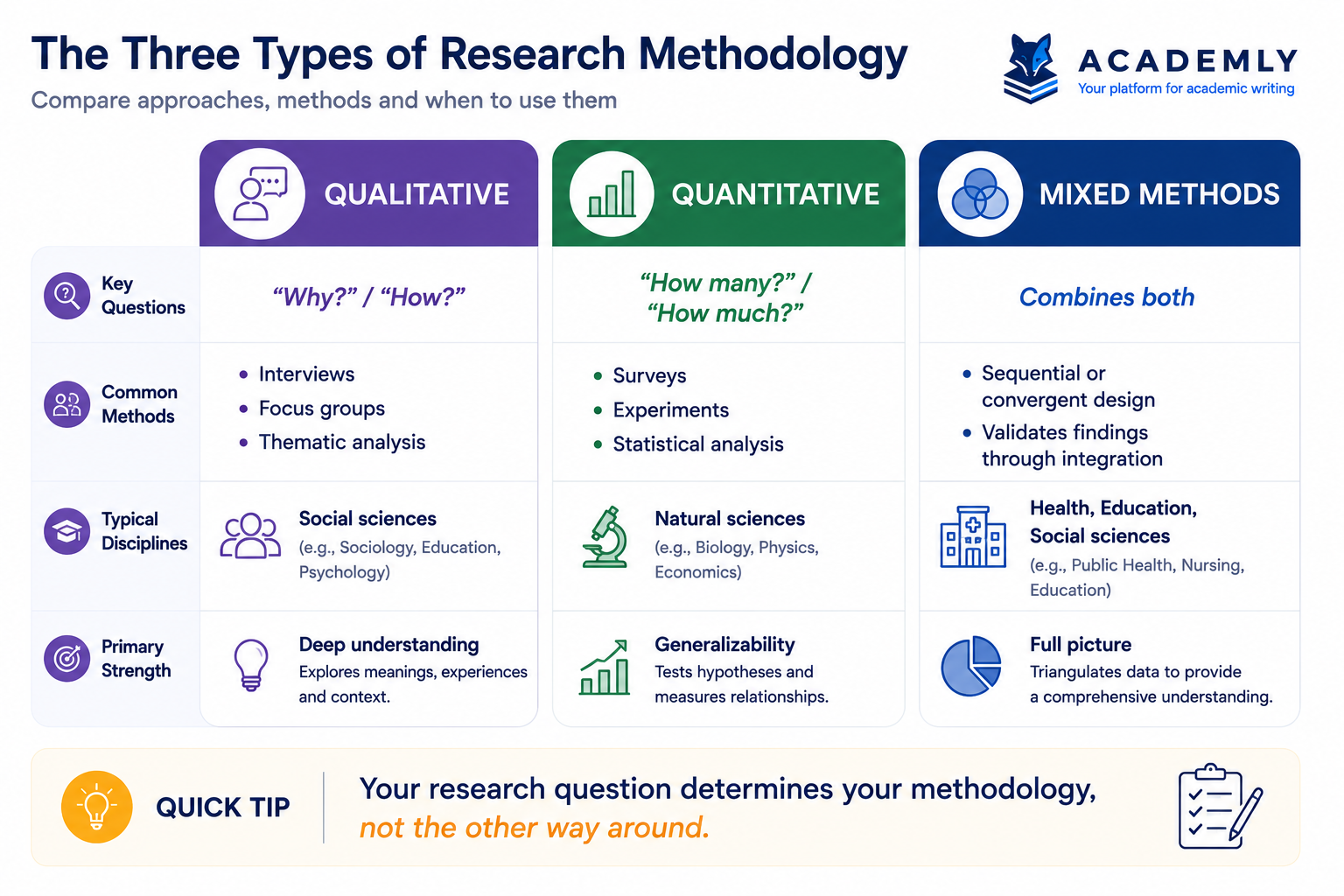
The theoretical framework and the research methodology should be aligned. A positivist framework points toward quantitative methods. An interpretivist framework points toward qualitative methods. See our guide on research methodology for how philosophical stance connects to methodological choice.
Theoretical Framework Examples
Example 1: Social Learning Theory (Psychology/Education)
Research question: How does peer modeling on social media influence adolescents' willingness to engage in risky behaviors?
Theoretical framework: Bandura's Social Learning Theory (1977) proposes that people learn behaviors through observation, imitation, and reinforcement. Applied to this study: adolescents observe peers on social media, imitate behaviors that receive social rewards (likes, shares), and develop expectations about outcomes based on what they observe.
Why this framework: Social Learning Theory directly addresses how behavior is acquired through social observation, which is the core mechanism under investigation.
Example 2: Health Belief Model (Public Health/Nursing)
Research question: What factors predict whether adults with type 2 diabetes adhere to dietary recommendations?
Theoretical framework: The Health Belief Model posits that individuals are more likely to engage in health behaviors when they perceive a threat to their health (perceived susceptibility and severity), believe the action will reduce the threat (perceived benefits), and feel capable of taking the action (self-efficacy).
Why this framework: The Health Belief Model identifies the psychological variables that influence health behavior adoption, which is precisely what the study is measuring.
Example 3: Constructivism (Education Research)
Research question: How do collaborative learning environments support the development of critical thinking skills in undergraduate students?
Theoretical framework: Vygotsky's Constructivist theory holds that learning is a social process in which knowledge is constructed through interaction with others, with more knowledgeable peers scaffolding the learner's development within the Zone of Proximal Development.
Why this framework: Constructivism explains the mechanism by which collaborative learning is hypothesized to develop cognitive skills, directly answering the "how" in the research question.
Where Does the Theoretical Framework Go in a Thesis?
The placement depends on the discipline and the thesis structure. The most common positions are:
Embedded in Chapter 2 (Literature Review): The theoretical framework emerges from the literature review and is articulated at the end of that chapter. Common in social sciences.
Standalone Chapter 2 or 3: The theoretical framework has its own dedicated chapter, following the literature review. Common in education, nursing, and management research.
Part of the Introduction: In shorter studies or papers, the theoretical framework may be briefly stated in the introduction.
Whatever the placement, the theoretical framework must be clearly articulated before the methodology chapter. Readers need to understand the conceptual lens before they can evaluate whether the methodology is appropriate.
When Do You Not Need a Theoretical Framework?
Not every study requires an explicit theoretical framework. Exceptions include:
- Purely descriptive studies: Studies that document the state of something without seeking to explain relationships between variables may not require a formal theoretical framework.
- Some qualitative approaches: Grounded theory, by definition, generates theory from data rather than testing existing theory. Applying a prior theoretical framework would contradict the methodology.
- Exploratory pilot studies: Studies that aim to develop instruments or identify variables for future research may not have enough theoretical grounding to apply a framework.
When in doubt, discuss with your supervisor. The expectation varies significantly by discipline, institution, and the type of research.
Common Mistakes When Writing a Theoretical Framework
1. Describing a theory without applying it
Writing three paragraphs explaining what Social Learning Theory is, without explaining how it specifically informs your study's variables, design, or analysis, is not a theoretical framework. It is a theory summary. The framework requires the connection between the theory and your specific research problem.
2. Choosing a theory because it sounds impressive
The framework must fit the research question. A theory that is well-known but only tangentially related to your problem weakens the study. The justification for your choice is more important than the prestige of the theory.
3. Using a theoretical framework that contradicts the methodology
A study using a positivist quantitative design cannot be grounded in a constructivist theoretical framework that rejects objective measurement. The philosophical assumptions of the framework and the methodology must be consistent.
4. Confusing the theoretical framework with the literature review
The literature review summarizes what is known. The theoretical framework explains the lens through which you will analyze your data. They are related but different documents that serve different purposes.
5. Presenting the framework as fixed and then ignoring it
The theoretical framework should appear in the literature review, the methodology, the analysis, and the discussion. If the framework is stated in Chapter 2 and never mentioned again, it was not actually used to guide the study.
How Academly Supports the Theory and Background Chapter
Writing a theoretical framework requires connecting existing theory to your specific research problem, citing the right sources, and producing text that holds up to scrutiny. That is exactly what Academly's Theory and Background module is built for.
The workflow is straightforward. In My Thesis, select the Theory and Background section and click "Create with AI: Draft Theoretical Background." The menu opens with your section title already selected.
Click "Find relevant sources" to search across your uploaded PDF library. Select the sources you want included in the theoretical chapter.
Then click "Generate Theory." Academly produces a full draft of the theoretical background chapter, with in-text citations drawn exclusively from the PDFs you selected. Every claim is linked to a source document and page number through the Evidence Panel, so you can verify that what is written reflects what your sources actually say.
The finished draft goes directly into the Thesis Editor for refinement and DOCX export. No hallucinated references, no generic theory descriptions detached from your research problem.
Summary
A theoretical framework is the conceptual foundation of a research study. It draws from established theory to define the key concepts under investigation, explain their expected relationships, justify the methodology, and provide the lens for interpreting findings. It is distinct from the literature review (which establishes what is known) and the conceptual framework (which is researcher-developed rather than theory-derived). Writing a strong theoretical framework requires identifying your key variables, reviewing the literature for applicable theories, selecting the most appropriate theory, justifying that selection explicitly, and demonstrating how it shapes every methodological choice. The framework should appear consistently throughout the thesis, not just in a single chapter.